
Final Destination, redux
A weekly conversation on some topics that were on @HT_ED's mind.

Every week, every day, I keep returning to a newsletter I wrote a few weeks ago on how everyday life in India resembles a Final Destination movie.
Here’s what I said: “I’ve never watched an entire Final Destination movie, but I’ve watched bits of various parts of the very successful franchise. They’re quite popular in India — perhaps because their central premise (when it’s your time, it’s your time) is in keeping with the fatalism that is encoded into all Indians.
I think about the Final Destination movies every time there’s an accident in India.
Family goes for joy ride in new SUV; overloaded truck on the other side of the road, swerves to avoid two-wheeler swerving to avoid pothole, tips over, and dumps its load on SUV, crushing entire family to death.
Overloaded bridge that’s not been maintained well, collapses, plunging tens to their death.
Bad weather and high-speed winds churn water in a reservoir, and ferry-ride turns fatal for a dozen people (many of whom were not wearing life jackets because the operator, who didn’t think the weather would turn as bad as the forecast warned, also didn’t think they were necessary).
Roller-coaster goes off rails in amusement park, killing some on board, and some spectators (there are always spectators in India, no matter what’s happening).
Doctor goes for walk on rainy morning, falls into open manhole, and drowns to death.
I could go on — but you get the picture.
I wonder if there’s an actuary who has actually calculated the probabilities of these accidental deaths (if yes, please do get in touch with me).”
I wish I didn’t have to keep returning to the thoughts I expressed in that newsletter, but India, and Delhi won’t spare me.
Last week, it was a building in Saidulajab that collapsed on some people, killing six. This week, it was a B&B that caught fire, killing 21.
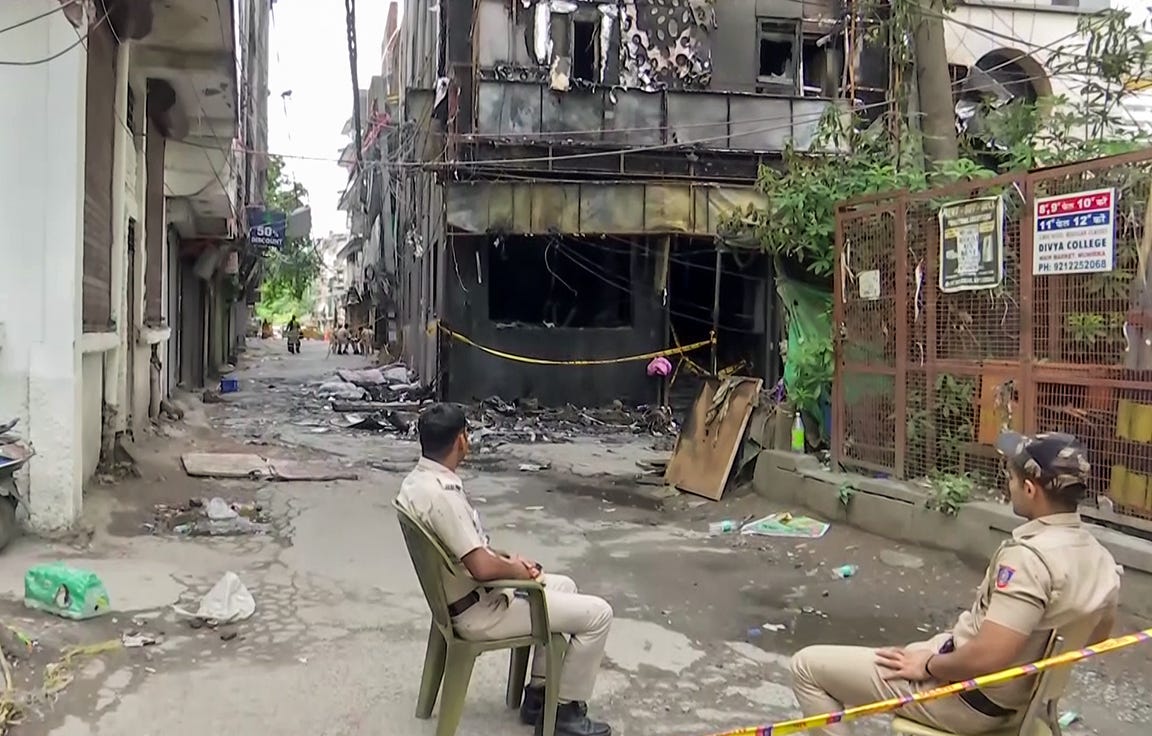
What does one blame?
Delhi’s poor land management? Lax regulations? Corrupt government officials? Venal developers? The B&B fire had elements of all these, and more.
Or maybe we should take the easy way out and just blame the victims.
After the Saidulajab incident, my colleague Roshan Kishore wrote a heartfelt piece titled Cockroaches and Zombies, which pretty much sums up life in any Indian metro.
Speaking of cockroaches, there are three predominant species in India — and none bears the name Indian. The most common is the German Cockroach, followed by the American Cockroach and the Oriental Cockroach.
Cockroaches are in the news because of the Cockroach Janata Party, formed as a satirical response to a gratuitous comment by the Chief Justice of India.

It’s the kind of comment one would associate with a WhatsApp Uncle, not a learned judge, and, perhaps realizing this, the Chief Justice has, to his credit, sought to walk back his words — but with little effect.
It is generally true that what’s said can’t be unsaid, unless the news cycle cooperates, decides that enough is enough and moves on. In this case, if the news cycle hasn’t moved on, it’s also because the CJP hasn’t allowed it to. It has appointed spokespersons and has promised to hold a protest on Saturday (the same day this newsletter is published). It is clear that what started as satire has, despite a disclaimer on the CJP’s website, now turned serious. Then, the only response I have to people who claim it is no longer funny is that it never was.
The other new political movement in town — movement today, party tomorrow — is K Annamalai’s. As is only natural in the case of a BJP leader from Tamil Nadu (a state where the party has an insignificant political presence), I have always felt that Annamalai gets more coverage than it warrants; for instance, his exit from the party was covered breathlessly by several news TV channels. Still, there is no denying his popularity among a certain section of the population — including many of my old friends in Chennai.
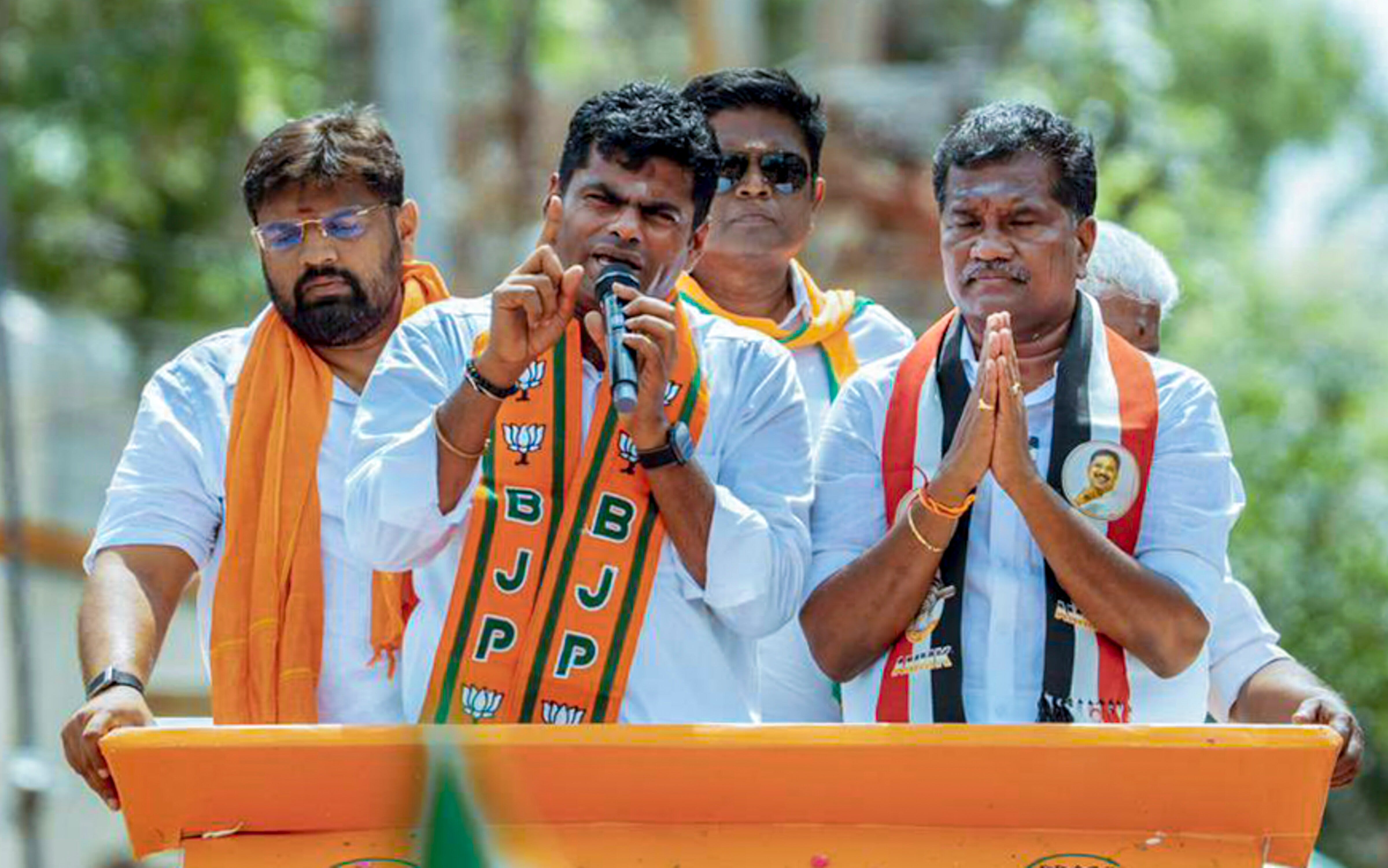
There are many theories being proffered about his exit — including an unlikely one about it being a plan orchestrated by the BJP’s top leadership to build a significant presence in Tamil Nadu (where the BJP is, at this point in time, anathema) using Annamalai’s party, and then having that party merge with the BJP when the time is right.
The more plausible one is that Annamalai is probably ruing his lost chances after a two-year-old start-up helmed by an actor seized power in the state, and sees an opportunity in the political space that has opened up as a result.
Amidst all the chaos of the week, I reached out for some comfort and found it (with no surprises and rough edges) in Paul McCartney’s new album, The Boys of Dungeon Lane. He sounds the same. The music sounds the same. And, at a time like now, this is reassuring and comforting.
Sir, as a nation, we are in the bad habit of cutting corners. Our casual chalta hai attitude often turns preventable risks into human tragedies. Disasters such as major fires are rarely the result of a single accident; they are usually the culmination of multiple failures—violations of safety norms, unauthorized constructions, blocked exits, faulty electrical wiring, inadequate inspections, and lax enforcement. As you rightly pointed out in your column, when rules are treated as obstacles rather than safeguards, every shortcut adds another layer of risk. The devastating fire in Malviya Nagar is a reminder that negligence accumulates over time. What may appear to be minor compromises in safety, compliance or oversight can cost lives. Such tragedies are not merely accidents; they are often the consequence of a culture that tolerates corner-cutting. Equally troubling is the silence that often follows such tragedies. There is seldom a serious reckoning with the administrative failures that allowed unsafe conditions to persist. In the absence of accountability, tragedies risk being reduced to statistics.
BJP. as a Party has a reputation to : coagulate the most unmacted colours and social antitheses. into a fabric that will somehow hold togeather -- the cost and result is not important - whatever it may be - the Fabric must hold togeather even it is non conducive and destructive
After all they have the means and the ways and cover their interest.