
The protests that forced Pradhan's resignation
A weekly conversation on some topics that were on @HT_ED's mind.

My generation doesn’t get the young. That’s a tough admission for someone like me who believes that 60 is the new 30 — and I am still a few years away from that milestone — but recent events have demonstrated this clearly.
First, many of us completely misread the election in Tamil Nadu — probably India’s first where Gen Z played a starring role. It doesn’t matter that the losing party was one that has never been re-elected after a term in office. And questions about the new government’s longevity, and the staying power of the start-up political party that swept to power are as irrelevant as they are hypothetical.
Then, many of us underestimated the Cockroach Janta Party, born of an unfortunate comment by the senior most judge in the country (how he must be regretting it!), and dismissed it as a social media chimera that would not last a week in the real world. Ha!
On Saturday afternoon, it triggered the resignation of Union education minister Dharmendra Pradhan – one of the protesters' key demands.
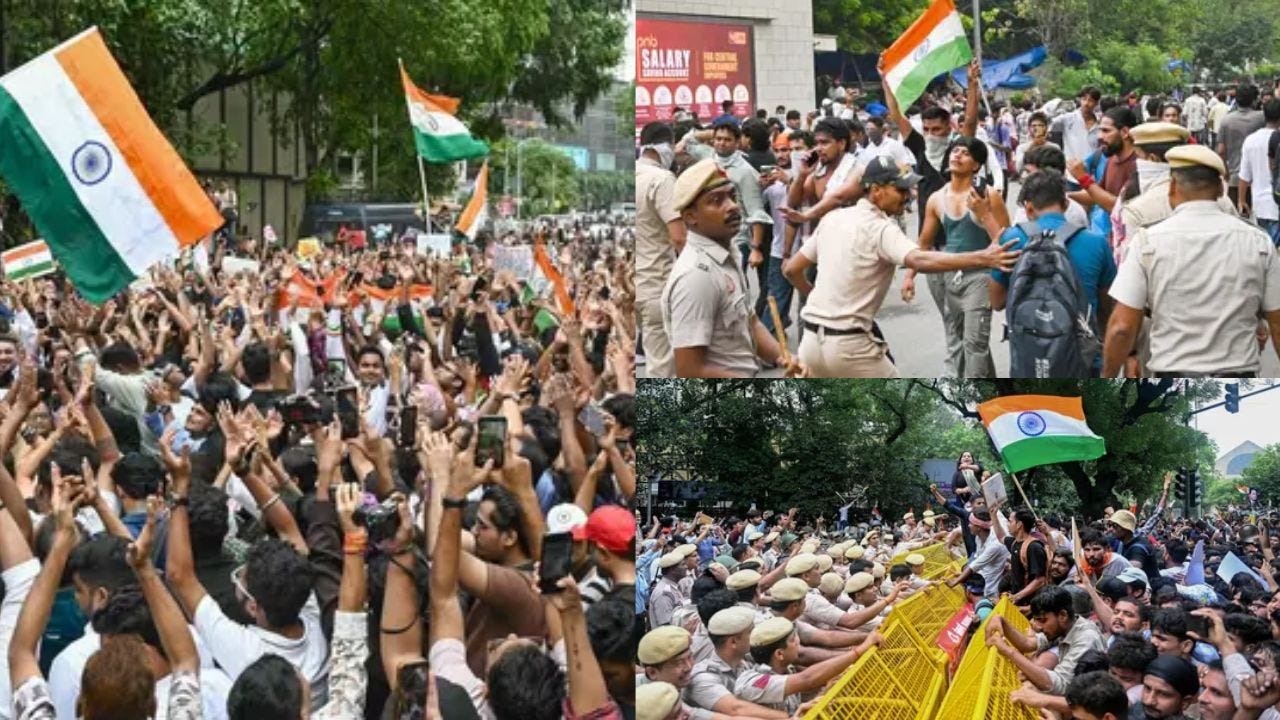
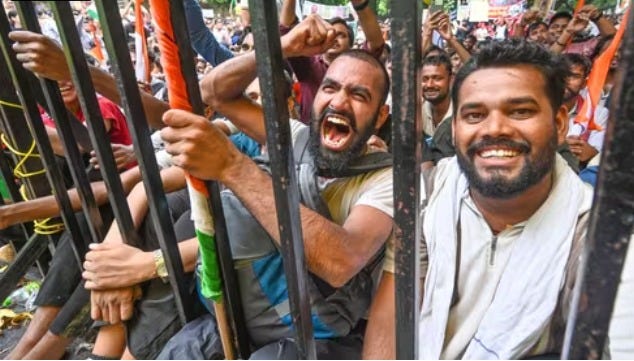
CJP has managed to transform a protest over a leak in the medical entrance exam paper (and the subsequent scrapping of the test) into a nationwide movement — and in a very Gen Z way. The protests — which CJP said were called off after Pradhan's resignation — were federated; there were multiple small protests within the larger one, people with their own slogans and chants, but united by a larger cause. No one, not even the Bharatiya Janata Party’s famed IT cell has been able to match the protestors ability to come up with viral memes and reels. Not surprisingly, the state has responded with characteristic heavy handedness, asking telcos to suspend mobile internet services around the main protest site in Delhi.
Opposition parties were slow to jump on to the bandwagon, but eventually did so — hoping to do to the government in Parliament what the protestors are doing to it on the streets. It is unclear whether their support has helped the movement, although it is very likely that Delhi Police’s handling of Monday’s march to Parliament by the protestors — lathis and tear gas shells featured, and there are reports of the use of pellet guns too — did.
The education secretary has been transferred as well and the government has announced that it is bringing in a tougher law to crack down on paper leaks.
In the 12 years that this government has been in power, it has become evident that it does not take a step back in ideological conflicts, but does not mind doing so in issue-based ones, especially when the likely political cost becomes high.
Fortunately for it, this movement is an issue-based one, which means it will believe it can change its position without losing face, and still retain the support of young people.
That’s debatable; young people in their early-to-mid-twenties have only known this government for much of their lives, which means they likely blame it for anything that goes wrong.
As to why students (and young people) are angry, the usual suspects are to blame — educational opportunities and career prospects. My colleagues Roshan Kishore and Abhishek Jha explained how in a two-part data journalism series.
Just another brick in the wall: Why is the educated youth angry?
Knocking on heaven’s door, but no answer: India’s employment crisis
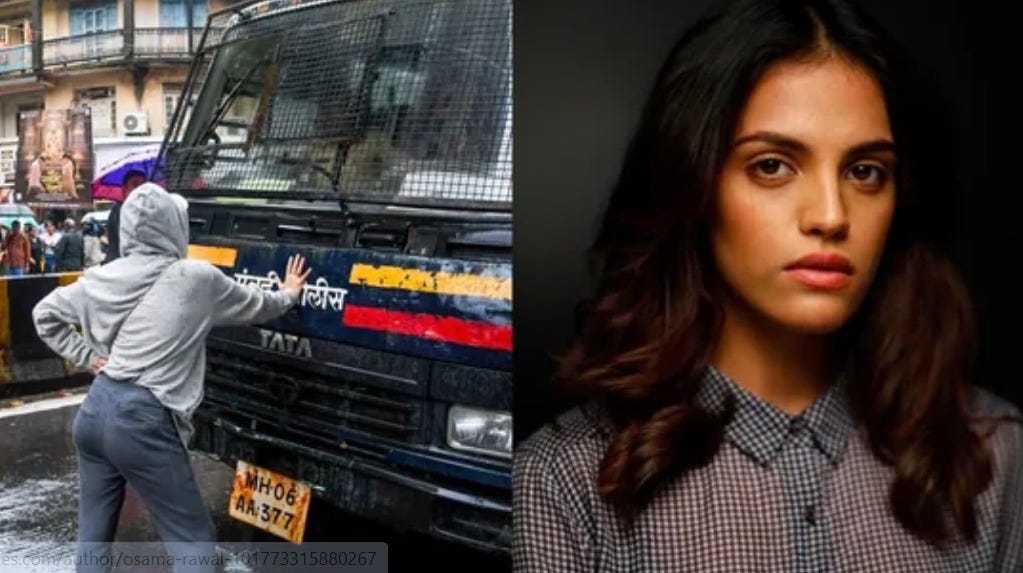
Movements throw up, and are defined by iconic photographs. There are several competing for that honour with this movement too — including a striking one of a Mumbai woman blocking a police van ferrying protestors, holding it back, Jessica Jones like.
The first photograph was taken around 200 years back, in 1826; today, as HT Wknd columnist K Narayanan points out in an essay, around 61,000 photographs are taken every second around the world, and roughly 14 billion are shared daily. “The selfie camera and Instagram have turned the photograph, once an art form designed to encourage new views of the world, into the ultimate tool of self-obsession; and the ultimate time sink.”
Only, the madness to capture every memory on phone, has likely stolen many moments of their magic. Then, selfies, reels, and other short videos are perhaps the preferred vehicles of the post-literate society we find ourselves in. Like so many other things that explain media, that term too was popularised by Marshall McLuhan.
It seems somehow apt to segue from talk of generation gaps and 200-year-old things to the Rolling Stones’ new album that came out this month. Their eponymous first album came out in 1964 (before I was born), which means they have been making music for 62 years. And Foreign Tongues may well be the Stones’ best album in four decades (or more). Strangely, for an album built with leftovers from their previous album, 2023’s Hackney Diamonds, Foreign Tongues is better than the latter, and truer to the best version of the Stones’ sound — a mix of blues and funk.
Everytime I hear the Stones, I remember the most famous lines from Tennyson’s Ulysses:
“We are not now that strength, which in the old days
Moved earth and heaven; that which we are, we are.
One equal temper of heroic hearts,
Made weak by time and fate, but strong in will
To strive, to seek, to find, and not to yield.”
Maybe if the Stones do another album, it could be called One Equal Temper.
The Odyssey, on which Ulysses is based, is in the news thanks to Christopher Nolan’s movie, which seems to have offended many people who seem to forget that the original itself was a work of fiction that came from a long oral tradition before it was finally printed.
There’s an interesting India link to the Odyssey. One of its most stylised translations is T E Shaw’s. T E Shaw is the name T E Lawrence (of Arabia) adopted in his later years, and while the book was published posthumously, he started work on it when he was posted in the RAF in undivided India.
Timely essay 💎