
The God in the machine
A weekly conversation on some topics that were on @HT_ED's mind.

Next week is going to be all about AI, with a summit in New Delhi attracting all the big names in the field. Several things have happened in the walk-up to it.
1. Last week, Anthropic PBC launched Claude Opus 4.6, which does complex tasks in legal, finance, and consulting as well as (or perhaps better than) professionals in that field do. The launch came at the end of a week when fears that the company’s AI coding tools could write code as well as anyone spooked markets around the world, causing a fall in many software stocks.
This week, the New Yorker’s Gideon Lewis-Kraus wrote a fascinating piece on Anthropic’s efforts to understand Claude’s mind (and how it works). It was reassuring because it made Claude look and sound naive in parts, but also frightening because it suggests that a lot of smart people believe Claude has a “self”.

2. On Monday, Matt Shumer published a post called Something Big is Happening, detailing the huge disruption AI will have on work as we know it — and on workers. The post, which has gone viral, has its share of critics — with the criticism ranging from it only being natural for software people to believe that just because AI is taking a giant wrecking ball to the software business as we know it, it will do the same with everything, to the fact that such an analysis ignores the jobs that will be added, and the economic benefits that will accrue on account of AI — but it is still a good read in the same way early posts about the pandemic (Shumer starts off by referring to that) were, although, as it turns out, most of them got almost everything wrong about covid. There’s a more reasoned take on jobs (and more) — Josh Tyrangiel’s article titled America Isn’t Ready for what AI will do to Jobs — although this too raises more questions than it answers.
I am hoping some of the deliberations next week are on these (even as we can expect many to be on the huge opportunity presented by AI). India is a good place to have these discussions because Indians love technology (perhaps almost as much as they hate science), and have, judging from the popularity of WhatsApp University, and the number of people on X seeking validation of their worldview from Grok, a huge amount of trust in it. Is AI an expert? An oracle? A God, even? Or is it just a tool?
The devil in the details
The past week has been all about the trade deal. There’s been a lot of debate about this, especially on three counts.
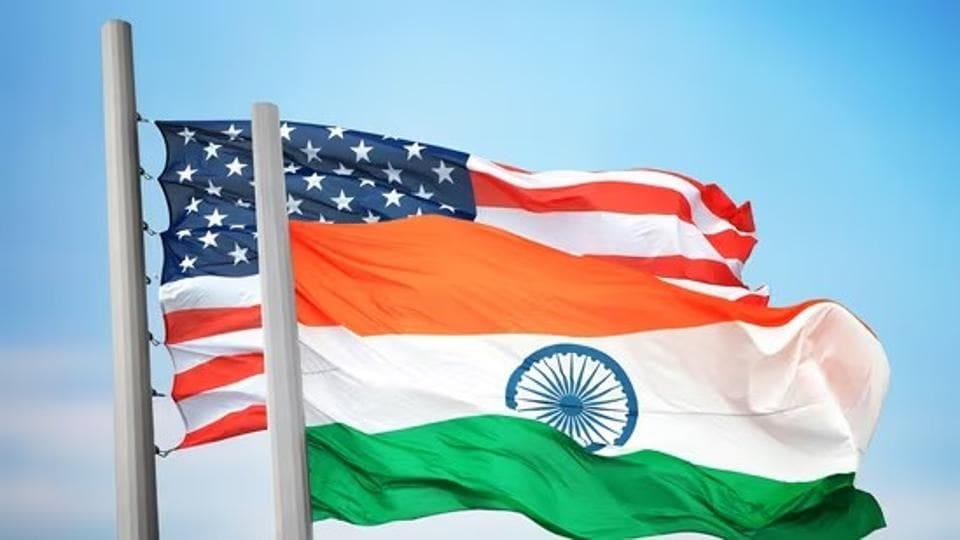
One, India reducing and eventually ceasing oil imports from Russia. There’s a school of thought that this will adversely affect Indian consumers — but it is important to understand that in 2025, oil from Russia accounted for around a third of India’s oil imports. Not all of the Russian oil was processed and sold in India; 40-50% of it (in some months) was being imported by Reliance Industries, which was refining it and exporting it, including to Europe. So, India reducing Russian oil imports is not as big an issue as is being made out — although it is another matter that it was forced to.
Two, the intent to buy $500 billion of American products over five years needs to be seen as just that — an intent. It’s the kind of headline number that makes (or breaks, if absent) deals, and, to be fair, over the next few years, India’s purchase of US goods will only increase — think data centre equipment, high-end chips, aircraft, etc.
Three, the fear that the deal will be detrimental to Indian farmers. That’s difficult to believe because Indian agriculture, despite all the protection and support it gets (some would counter-intuitively argue that it is because of this), is extremely uncompetitive. Just like there are many Indias — a theme on which this newsletter has weighed on in the past — there are many kinds of farmers, and most of them are small ones practising sustenance agriculture. At best, the deal could have no impact on Indian agriculture; at worst, it will pose another challenge to the hundreds Indian agriculture currently faces.
HT annotated the first joint statement on the deal, which remains the basis of much of our understanding — the deal is expected to be signed only towards the end of March.
To be sure, much depends on how Indian exporters leverage the deal — it does not put them at a disadvantage, but any advantage will have to be earned — and that is something which will become clear only with time.
Earning their stripes
While on the subject of competitiveness, one of the criticisms of India has been the difficulty in doing business. To address this, Invest India, a non-profit working under the Union commerce ministry, runs a portal called National Single Window System for clearances which facilitates approvals from central government departments and all states and UTs.
Except, in their enthusiasm to help, the good folks at Invest India seem to have offered to help divert a “tiger reserve for ecologically unsustainable uses”. Tiger reserve in the way of your project? No problems sir; we will move it. After Hindustan Times wrote about this, the facility, one of 46 offered under the ministry of environment on the portal, was removed, along with two others, which also dealt with reserves.
It makes me wonder — if HT had not reported it, and if someone had actually sought to divert a tiger reserve’s land for a project, would Invest India have facilitated it? Could it have? One never knows.
An unknown known, or a known unknown, or an unknown unknown?
There are many books in my head — and when I stop doing my day job, I will perhaps write some of them. But unlike these books which only exist in my head, former army chief Manoj Naravane’s memoir exists. An excerpt even appeared in the Press Trust of India wire service in December 2023.
That was a pre-release excerpt.
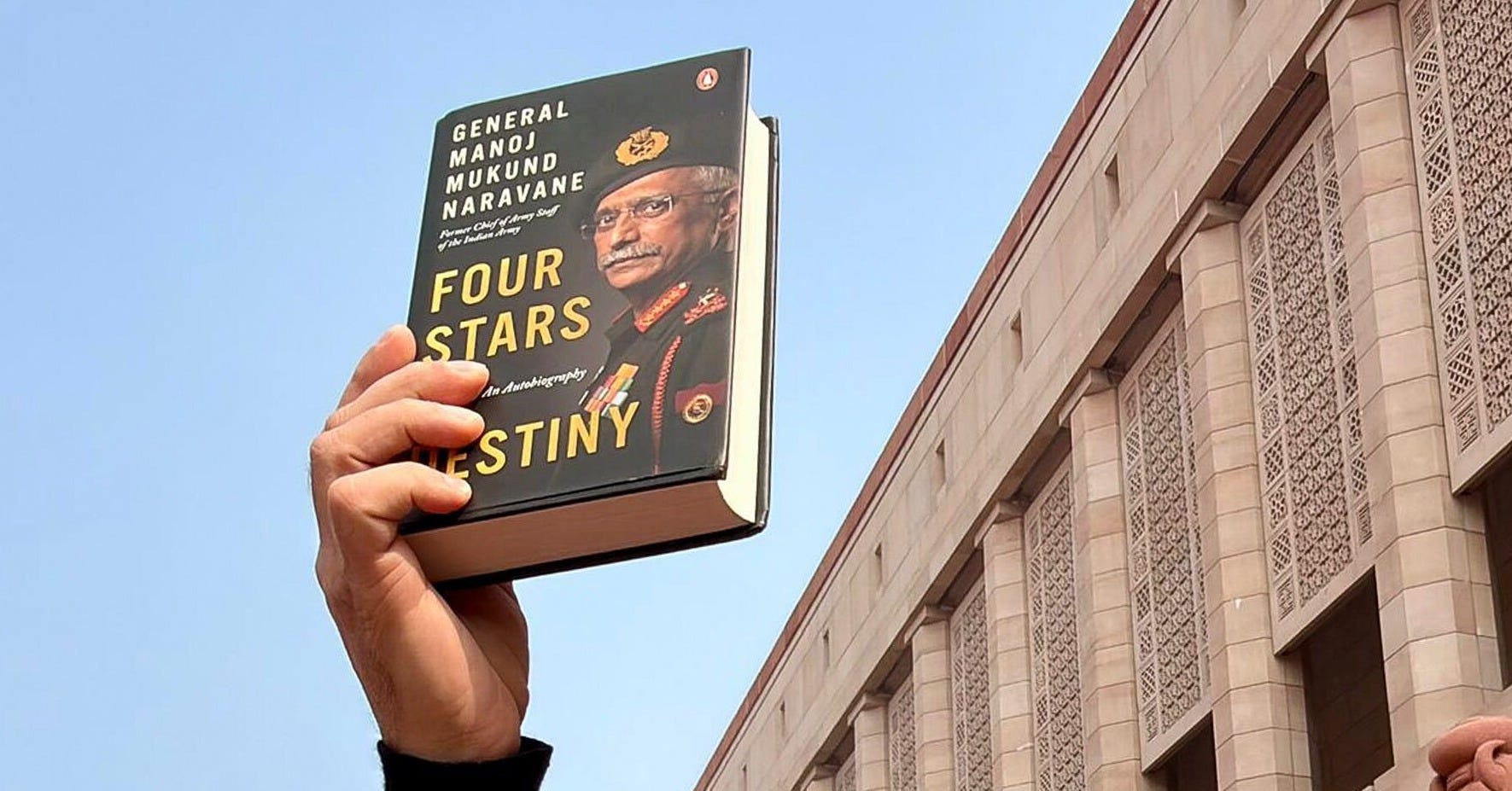
It is evident that copies of the book, in hard copy form, or PDF one, were sent to PTI (how else could they have run an extract?). It is also very likely that some of them were sent to people who were requested for “blurb quotes” — basically famous people saying nice things about the book.
It was only after the PTI extract that the author and publisher perhaps woke up to the fact that the book needed a clearance by the army — or maybe they thought this was a mere formality — and hurriedly called back copies, or cancelled pre-orders, or both.
In fact, it won’t be too difficult to find out where the book was printed — most are printed in a large press in Haryana. I wonder what happened to those copies? Have they all been pulped?
So, the book exists, in pre-release limbo.
Click-bait
Come to think of it, an excerpt is, at some level, the equivalent of click-bait. As I have discovered is anything to do with cats. Our Wknd cover story this week (it appears tomorrow) explains their appeal to some people (not me; I am a dog-person).
The thrill is on
Chaka Khan, Eric Clapton and Joe Bonamassa doing The Thrill is Gone? It sounds good but isn’t my favourite version of the song—which is a Grisman/Garcia one.
The first, which is just out, is part of a BB King tribute album put together by Bonamassa that features Buddy Guy, Slash, Jimmie Vaughan, Larkin Poe, Keb’Mo’, Christone Kingfish Ingram, Warren Haynes, and many others. It’s worth a listen.