
Outcomes and arbitrariness
A weekly conversation on some topics that were on @HT_ED's mind.

The controversy over the new on-screen-marking (OSM) system for Class 12 examinations conducted by the Central Bureau of Secondary Education is especially tragic not just because of its impact on the future of students, but because it could have been avoided.
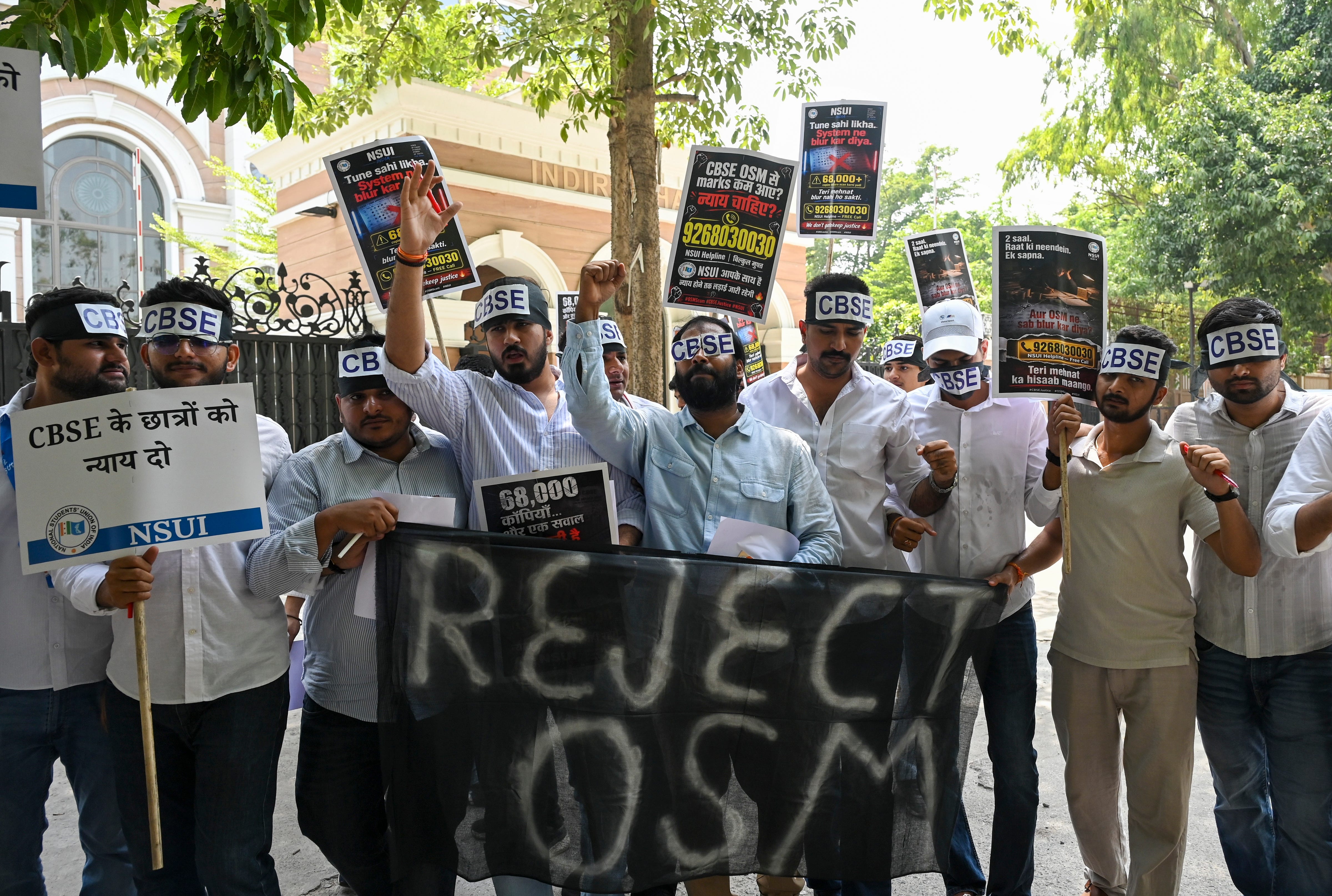
On paper, scanning answer sheets of school-leaving exams (aka board exams in India because they are conducted by an education board, not the school), and having them assessed by examiners is a good idea — even if it is an incremental process improvement.
But rushing through the implementation of a change as significant as this — it requires the system used to be stress tested, pilots to be run, and examiners to be trained — is a bad idea.
And when things go wrong, as they are wont to when closure, not effectiveness or efficiency is the focus, sending out a toolkit to educators to create content suggesting that all was well with the implementation (barring some expected teething trouble) and post it on social media is a very bad idea.
The script is a tired one: good intentions, obsession with outcomes, blind belief in technology, complete lack of attention to detail, and inordinate emphasis on controlling the narrative, topped by an almost naive expectation that doing so will somehow make the problem go away.
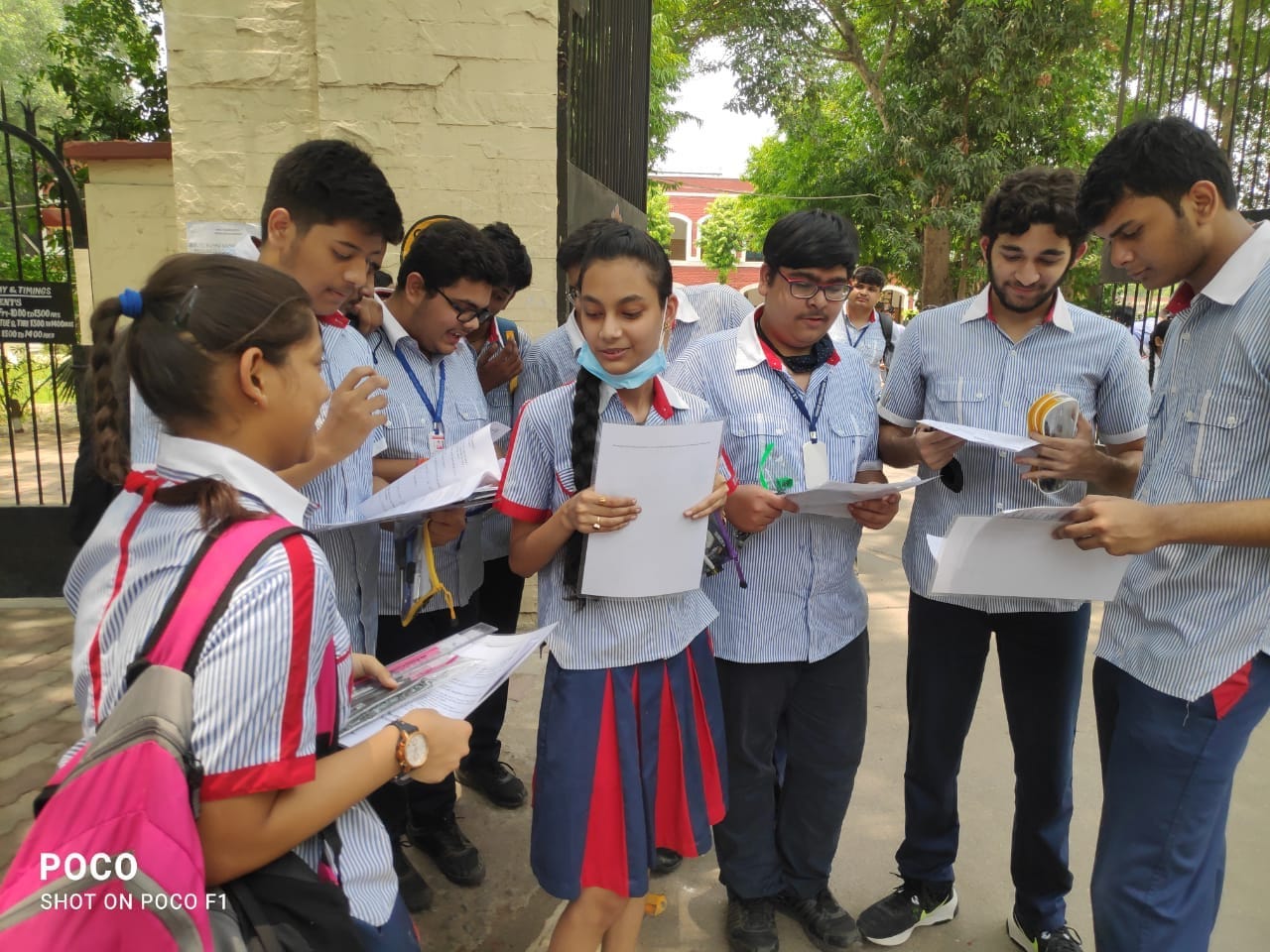
My colleague Sanjay Maurya was the first to report that the board’s own governing body suggested that OSM be “implemented in all subjects only after the completion of pilot projects in some subjects across various regional offices of the boards”.
Instead, the board merely conducted a two-day exercise for 100 teachers across five Delhi schools in January. It isn’t clear how the board thought that could suffice.
Worse, a teacher who participated in that exercise told Maurya that they warned CBSE that implementing OSM “required at least a year or two of proper training before rollout”. The same teacher, who was also part of the actual evaluation of papers from March 7 added that “many teachers (who evaluated papers) were unfamiliar with the software and effectively learnt while evaluating live answer scripts”.
Another educator told Maurya that the emphasis was on speed. “Teachers had daily targets (for evaluation). Speed mattered more than careful evaluation”.
Expectedly, there’s been a spike in applications for scanned copies of corrected answer books.
It is not clear whether the move to OSM was behind the significant fall in Class 12 pass percentage this year — by 3.19 percentage points to 85.20, the lowest since 2019.
Nor is it clear why OSM had to be implemented this year.
What is clear is that CBSE also seems to have rushed through the tender process according to another report by Maurya. The first tender issued in February 2025 attracted no bidders; the second, issued in May of the same year, didn’t find any technically eligible bidders, and a third, issued in August 2025, relaxed some key requirements including minimum scanning resolution (from at least 300 DPI to at least 200 DPI, although this is unlikely to have made the scans illegible or blurred) and removed the mention of the scanning being done through “automated or robotic high-speed scanning infrastructure”. Both TCS and Coempt cleared the technical criteria in November 2025, and Coempt was subsequently selected as the company that would implement OSM. The evaluation started on March 7.
When the controversy broke, one of the board’s first moves was to have its regional offices circulate a document “Material for Principals”, a sort of social media toolkit defending OSM, according to a third report by Maurya, who also found that the contents of this document were echoed in hundreds of videos posted by school administrators. The document asked principals to say “As with the rollout of any technology on such unprecedented scale, I know that a few implementation bumps have caused concern…”. It also urged them to describe the board as “highly proactive, empathetic, and communicative regarding these teething issues”.
There, reel made, problem solved.
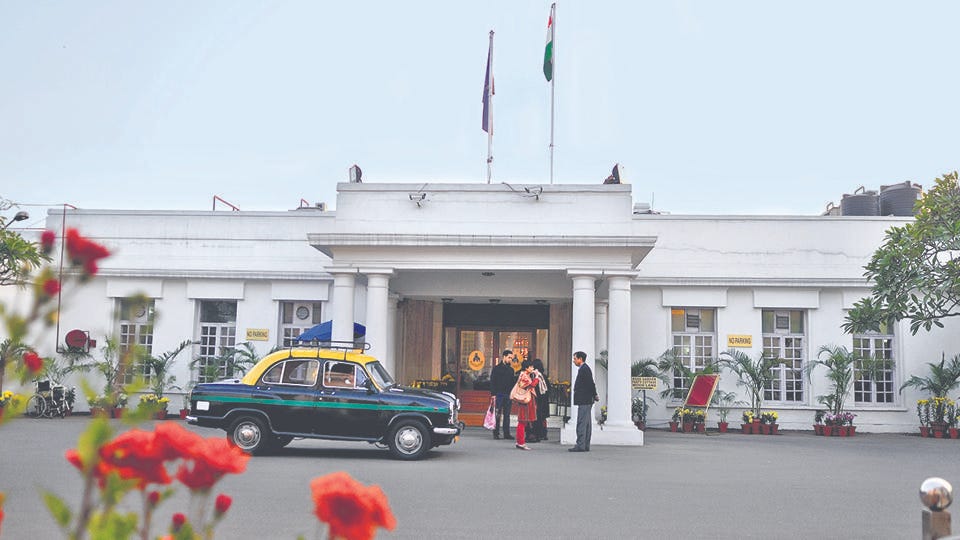
The other controversy in a week of them involved the Gymkhana Club. I am not a member of Delhi Gym, as many call it, my views on clubs being the same as Groucho Marx’s, but I can understand the general resentment over memberships (mostly hereditary in the case of Delhi Gym). The ordinariness of current members (around 14,000 of them) or the extraordinariness of their ancestors is of little relevance, as is the real or imagined security threat it poses (located as it is, next to the Prime Minister’s current residence), or the sudden critical need the defence establishment has for the land on which the club is located. The Union government owns the land on which the club is located, and while its decision to repossess the land may be arbitrary, so is the private club’s membership policy. Like all civil disputes, this is a matter for the courts to rule on, but it’s great fun to see people from either side having meltdowns on social media.
My colleague Roshan Kishore has a theory that because the lawyers fighting the case on behalf of the club and its members are stalwarts from the Opposition, someone from the government will, at some point, present this as evidence of the opposition parties’ desire to perpetuate an exclusionary colonial legacy, but I’m not convinced.
In some quarters, L’affaire Gymkhana is being passed off as another attack on liberals and liberalism. As implausible as that may sound, there are enough people who consider themselves liberals that are willing to buy the argument. Which begs the obvious larger question on liberalism itself — one that our columnist Rahul Sagar seeks to answer in his latest book The Birth of Indian Liberalism: Mama Parmanand’s letters to an Indian Raja
Actually, the book is only partly by Sagar — an erudite and lengthy essay (of around 100 pages) that serves as the book’s introduction. The rest of the book is a reproduction of Letters to an Indian Raja by Narayan Mahadev Parmanand, one of the earliest works of Indian liberalism (it was first published in 1891), but which then lapsed into obscurity, especially with the rise of the Congress. As Sagar wrote in an Op-Ed in Hindustan Times a few weeks ago, “The variant of Indian liberalism that subsequently came to dominate the public sphere was the one that evolved in British India after 1919. It focused not on empowering individuals but on representation based on group membership, which meant that its victory came, as Parmanand feared, at the expense of both individuality and solidarity. And so when we are puzzled by the condition of Indian liberalism today, which speaks boldly about group rights but quavers over a uniform civil code, it is worth remembering that there once existed another liberalism in another India, which measured progress by the well-being of individuals rather than groups.”
In a more recent Op-Ed, again for HT, Sagar explores the relationship between liberalism and religion. “The aim of the early advocates of Indian liberalism was not to separate religion from politics…,” he writes, adding that their struggling efforts to espouse theism eventually ran up against the momentum of the Congress. “The final blow came with the rise of the Indian National Congress. In vain did liberals warn that religion is never far behind in the affairs of men. The Congress dismissed their pleas on the ground that it was “not fitted to deal with the social affairs of the multitudinous divisions of India”. This fateful decision meant that when religion subsequently reared its head in the form of fundamentalism and then separatism, there was no answer to give but electoral formulas. Coexistence came to depend on arithmetic rather than theology.”
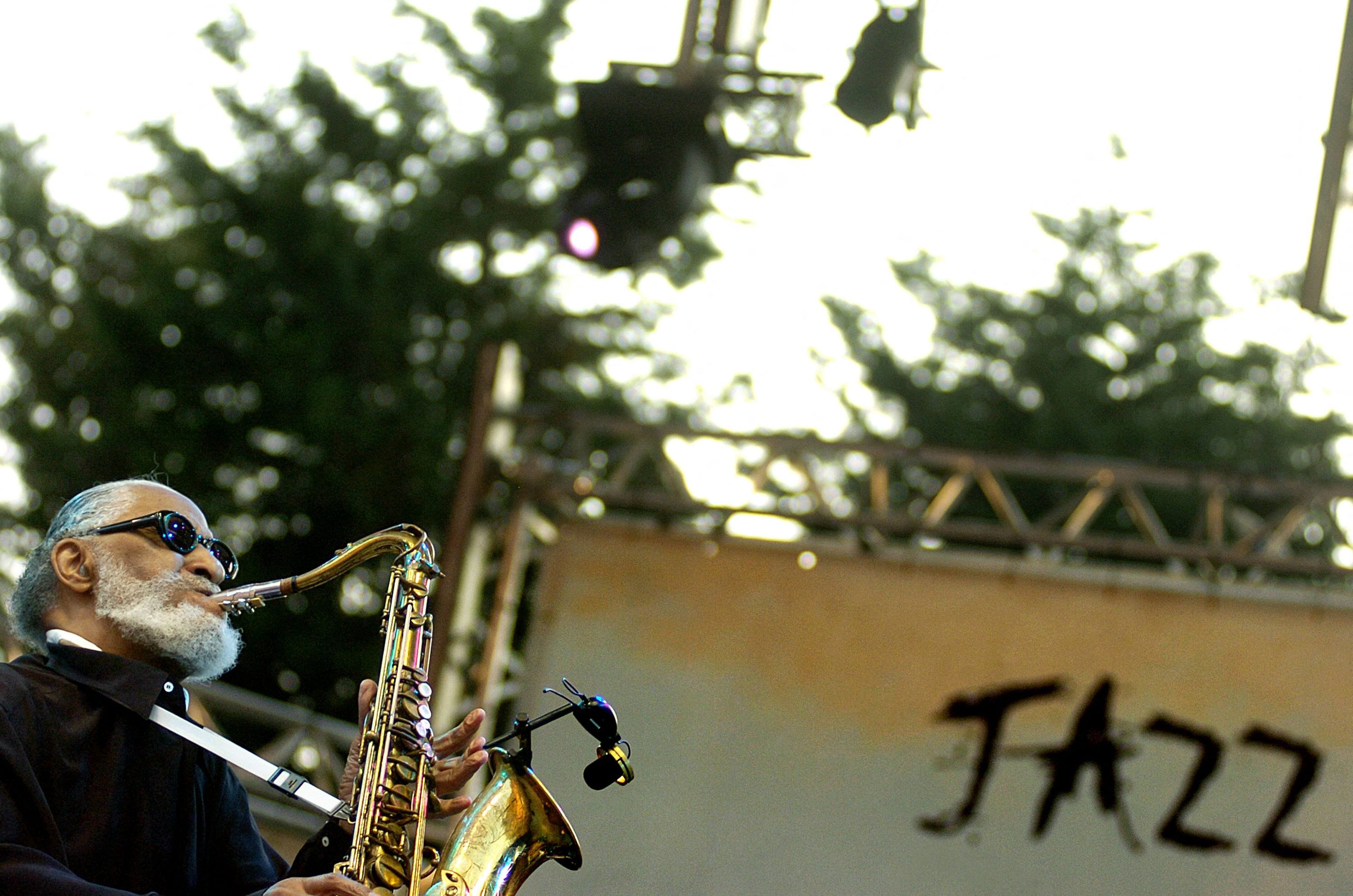
Jazz great Sonny Rollins passed this week. My favourite Sonny Rollins album is Sonny Side Up from 1957, featuring Dizzy Gillespie on trumpet (he also tries to sing), Rollins on tenor sax and another Sonny, Sonny Stitt (who usually plays the alto sax but plays the tenor here). The music is tight, has a great tempo, and is proper hard bop, just the way I like my jazz. Most tributes have overlooked this little masterpiece — not that I have anything against Saxophone Colossus and A Night at the Village Vanguard which pop up in almost all listings.
💎