
On contradictions
A weekly conversation on some topics that were on @HT_ED's mind.

Heller!
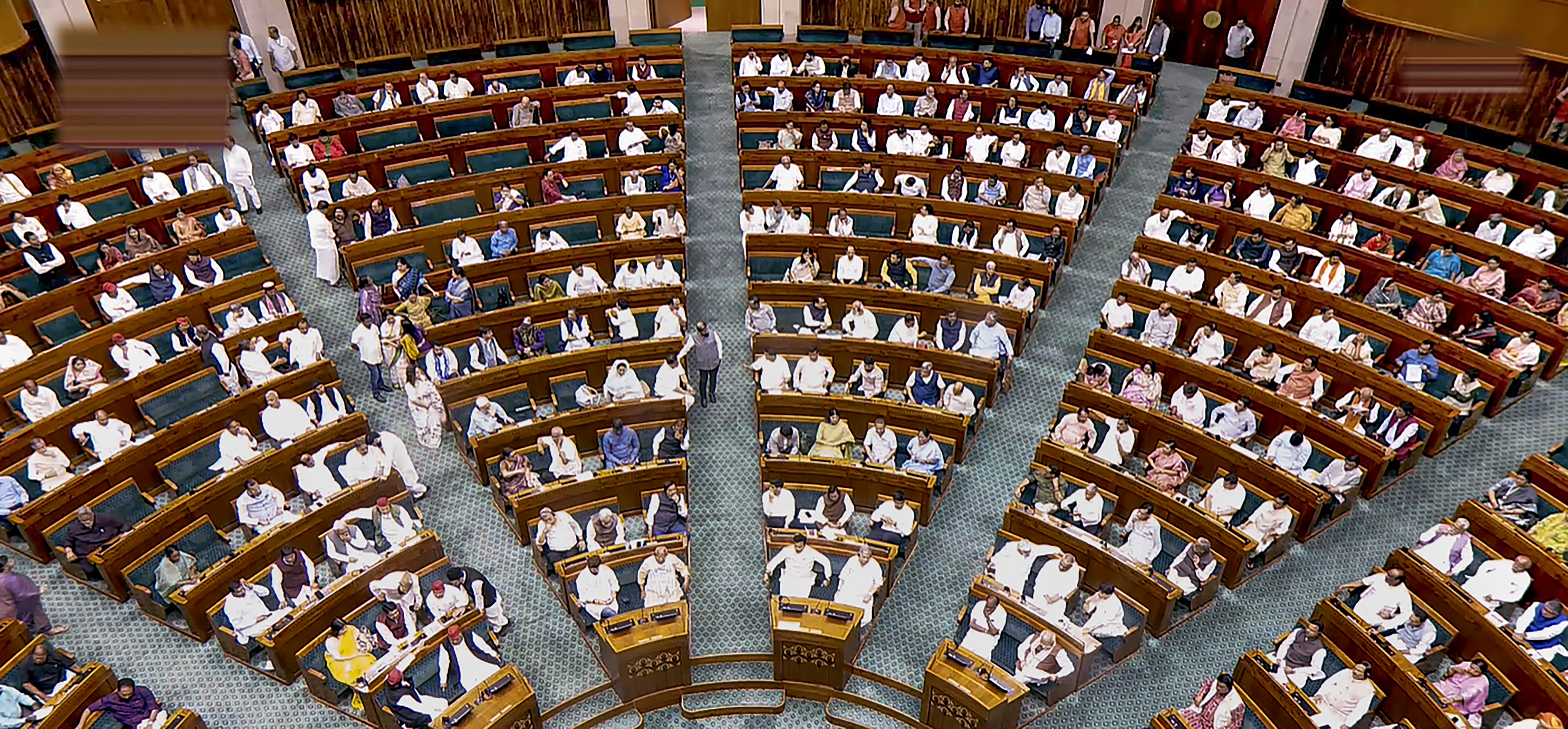
It isn’t really a Catch-22 situation—anyway, most people use the term in the wrong context—but the debate over the effort to fast-track the women’s reservation law reflects an internal contradiction that has perhaps forced opposition parties to vote against the constitutional amendment raising the ceiling on the membership of the Lok Sabha to 850. But more on this in a bit.
On Friday evening, the bill was rejected 298 to 230 after a vote. A constitutional amendment needs the support of two-thirds of the house (in attendance). Two other bills on delimitation were also withdrawn shortly after.
As things stand, it is now clear that the women’s reservation law will come into effect after the results of the latest census (it’s ongoing) are published—that’s what the original law says—and the delimitation commission set up after that, allocates seats across states. The current freeze on changing allocations ends with the first Census published after 2026 (as decided in the 84th amendment passed in 2001). That delimitation commission, which will likely be set up sometime after the results are published, will also decide which seats are to be reserved for women. And given that the census is also counting castes, there may well be a demand for reservation of seats on that basis (currently, the only caste reservation is for Scheduled Castes). That means women’s reservation will likely come into effect only in 2034, along with a reallocation of seats across states to reflect latest population numbers.
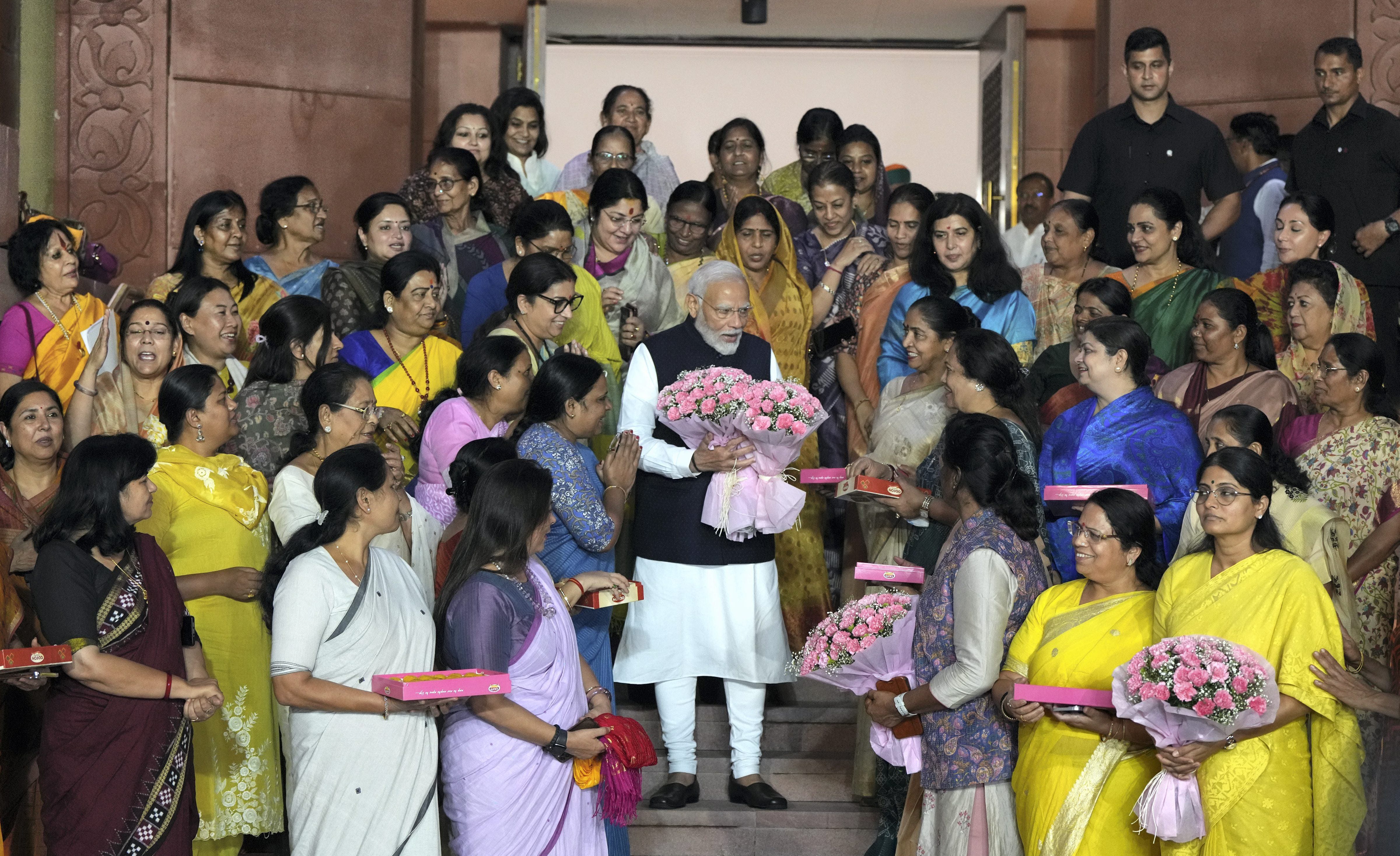
Interestingly, the government notified the immediate implementation of the women’s reservation law (passed in 2023) on Thursday night. The motives for this are not clear—the technical argument seems to be that Parliament can’t take up amendments on a law that has yet to be notified—but the terms of that law state that its implementation will still have to wait for the results of the ongoing census and the delimitation that will follow.
That leaves open the debate on any delimitation that is done on the basis of population penalising the southern states for getting their population under control—the national imperative in the 1970s and 1980s, even the 1990s—by reducing their proportional representation in the Lok Sabha. These states (with the exception of Andhra Pradesh, all are governed by parties that are not part of the Bharatiya Janata Party-led National Democratic Alliance) already believe that they are subsiding poorer, northern states (an argument that has some basis). With welfarism emerging the guaranteed way to retain or wrest power in an election, and having given up their sovereign right to tax when they signed on to the Goods and Services Tax regime, there is a strong fiscal basis to the unhappiness of these states with the Centre.
It doesn’t help that the union government has a spate of centrally sponsored welfare schemes (this basically means the Centre provides a significant portion of the funding, although the states too have to cough up a not insignificant share; and it means the schemes are usually branded by the Centre, typically after the prime minister), and has clearly identified beneficiaries of such schemes as a target audience for its electoral efforts; it also doesn’t help that many of these schemes are in areas in the concurrent or state list in Schedule VI of the Constitution; and it definitely doesn’t help that relations between the Centre and these states are bad—the result of the BJP approaching every election as a matter of life and death.
This results in a situation where the top leaders of the central and state governments, the very people meant to be working together and building a working relationship, spend a lot of time calling each other names. Governors, appointed by the Centre, who believe their job is to work as an agent of the union government, have only made matters worse. HT has consistently highlighted this fraying of the federal fabric.
To return to the contradiction I referred to at the beginning, it is best captured in an imaginary exchange between the government and the opposition.
O: The southern states, especially, will see their proportional representation go down if we agree to this delimitation bill.
G: Not at all. That’s why we are increasing the seats proportionately by 50%; the seats of all states will go up by 50%.
O: But that’s not what the bill says; it says the latest Census, which in this case will be 2011.
G: But I am telling you this now. Tamil Nadu has 39 seats, it will go up to 59. Karnataka will go up from 28 to 42. And similarly for other states.
O: Shouldn’t this be part of the bill?
G: We can’t put these numbers in the bill; because deciding allocations is the job of the delimitation commission.
O: How can we trust you, because something mentioned in Parliament but which is not part of a law that is passed by Parliament, has no legal standing. It’s always the letter of the law that matters.
G: Trust us.
O: !!!
HT has been covering the issues of women’s reservation and delimitation extensively over the past week. Here’s what you should read:
Sillitoe!
There’s a lot to celebrate in sport this week. R. Vaishali has won the Candidates and will now take on Ju Wenjun (the dates and the venue for the championship match are yet to be decided) for the women’s chess world title. You can read Susan Ninan’s interview with her here. On the men’s side, Javokhir Sindarov will take on D. Gukesh, the reigning world champion.
But it was Sawan Barwal who came 20th at the Rotterdam Marathon this week who captured my attention. Barwal’s time was 2:11:58, and it eclipsed, by 2 seconds, the previous national record, the late Shivnath Singh’s 2:12:00 set back in 1978.

When a record that lasts almost 48 years is broken, it makes sense to revisit the person who set it all those years ago. Singh was not a stranger on the international marathon circuit. He came 11th at the Montreal Olympics, with a time of 2:16:22; the winner’s time was a new Olympic record (at the time)—2:09:55.
For short-distance sprints, speed and technique is all that matters. In 800 m and 1,500 m races, strategy starts playing a part. Endurance comes into play for 5,000 m and 10,000 m races. But in longer races, the competition isn’t other runners. It is the conditions. And it is a runner’s own physical and mental stamina.
As Sriram Singh, one of Shivnath Singh’s contemporaries, and a two-time Asian Games gold medallist in 800 m, puts it, the latter “was world class”, and at a time when “there were no facilities, no synthetic tracks to train on, no good running shoes, no masseur, no sports medicine experts”, only “determination and hunger”.
And, of course, heart.
Sinclair!
The local administration and law enforcement may be keen to project worker protests in Noida as conspiracies hatched across the border, but the reality is more prosaic.
As my colleagues Abhishek Jha and Roshan Kishore explained, “a monthly salary of Rs 22,500 puts a manufacturing salaried worker in the top 20% of their peers”.
There’s worse, as that piece goes on to show: the absence of basic rights; the fact that older manufacturing workers earn less than other workers in the same age group; and the increasing share of contract workers in manufacturing.
Or as economist Arjun Jayadev said in a column on the edit pages of HT: “What is not paid in wages and dignity may eventually be paid in unrest. India’s policymakers have long treated this as a problem for another day. Noida suggests that the other day may be arriving”.